
Sustainability Weekly

Fridays are for…
Wildlife Overpasses, Creative Powerlines, Grassroots Groups, and more!
by Alli DiGiacomo
Happy Friday! This is the last Sustainability Weekly of the year, and what a wild year it has been! As 2025 wraps up and data is collected through December, this year is still on track to be the 2nd hottest year on record (right behind 2024). That being said, this week is ending the year off on a lighter note with three positive articles.
Don’t forget, if you purchased a live Christmas Tree in NYC this year, you can dispose of it in your curbside composting services on your normal recycling pick-up day. Do not put it in a bag! They will be collected and processed into mulch/compost for NYC Parks.
Keep reading for more sustainability news…
T H I S W E E K ’ S T O P S T O R I E S
NORTH AMERICA’S LARGEST WILDLIFE OVERPASS IS FINALLY COMPLETE
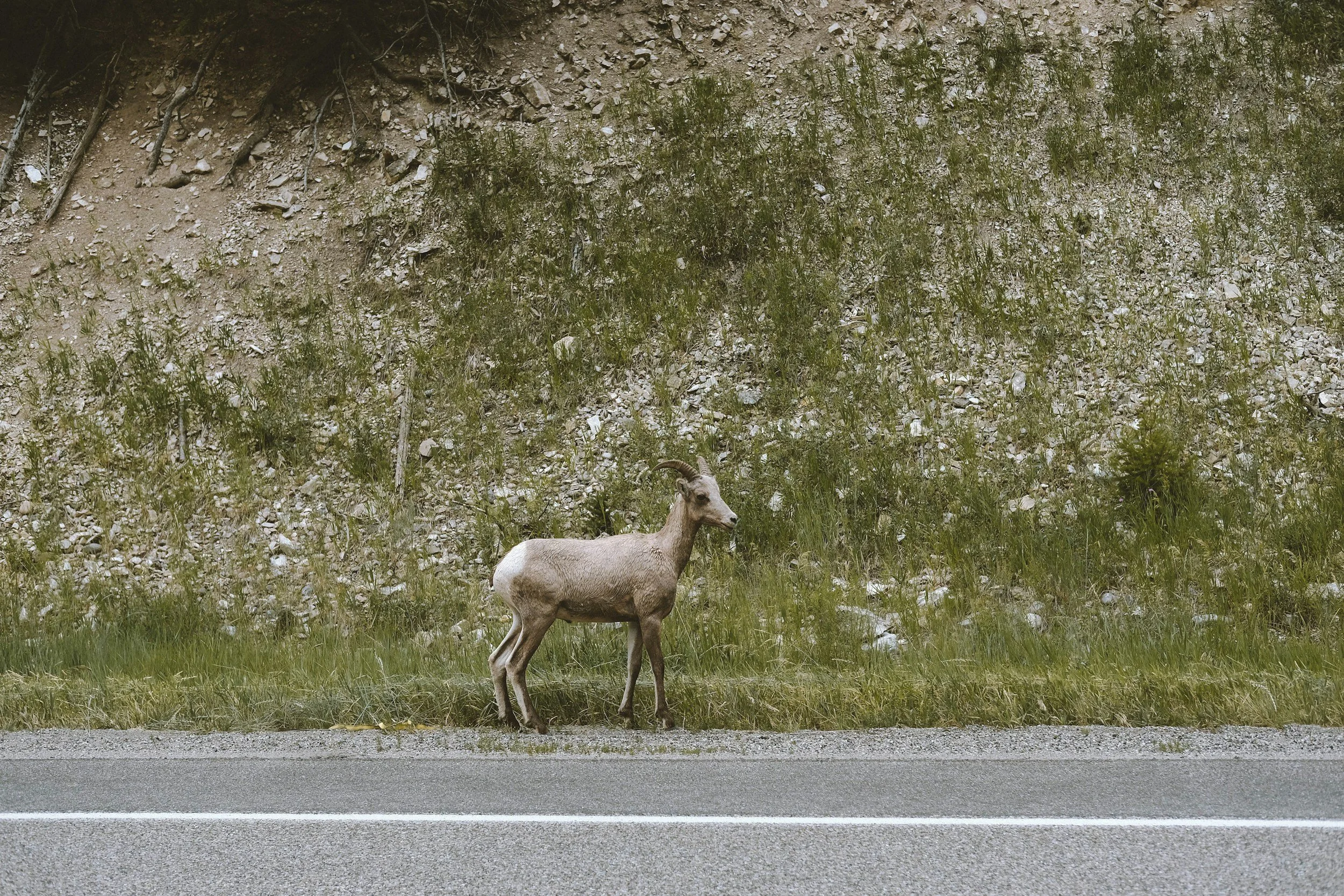
Colorado just completed construction of North America’s largest wildlife overpass, a massive bridge over I-25 designed to help animals cross the highway safely. More than 100,000 cars use this six-lane freeway every day, but it also cuts through important habitat for elk, deer, pronghorn, bears, and mountain lions. The new overpass is only roughly an acre in size but it reconnects ~39,000 acres of open land, giving wildlife a safe way to move between feeding grounds, water sources, and migration routes. It’s expected to reduce wildlife-vehicle crashes by up to 90%, improving safety for both animals and drivers. The overpass is 200 feet wide, 209 feet long, which makes it one of the largest wildlife bridges in the world. The project was 30 years in the making and is a major win for wildlife protection, human and public safety, and long-term habitat preservation in Colorado.
HOW AUSTRIA IS TURNING ITS BORING POWER LINES INTO GIANT METAL ANIMALS WITH MULTIPLE PURPOSES
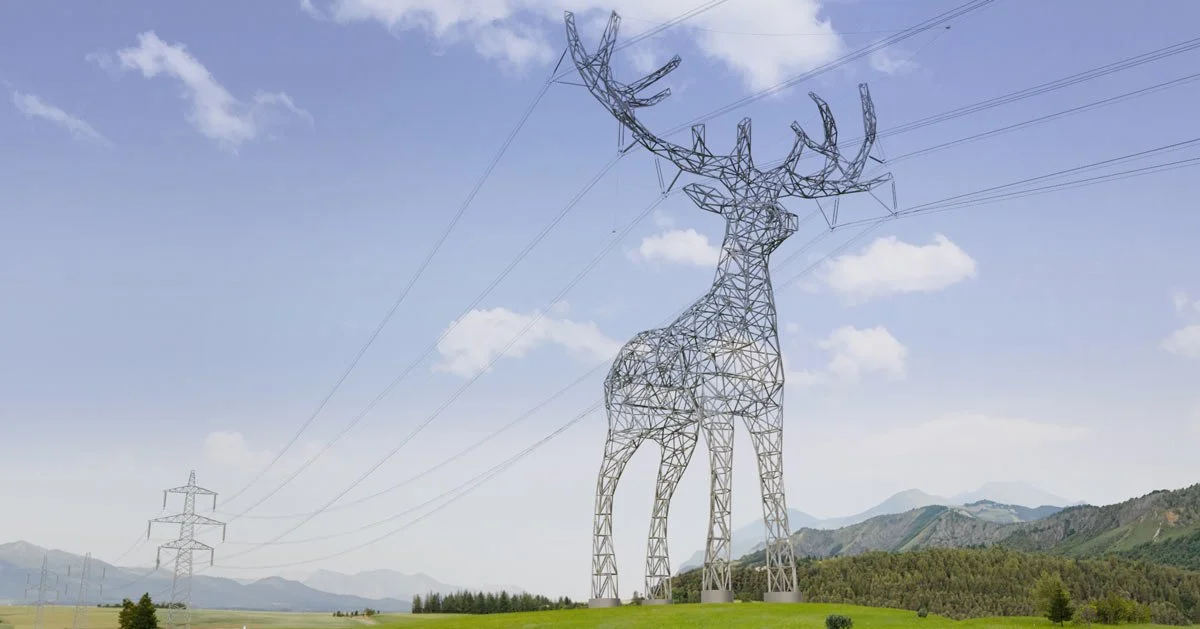
Austria is getting creative with its expanding power grid by turning standard electricity pylons into massive metal animal sculptures. Electrification is expanding and so the grid infrastructure is too. One of the public critiques and biggest issues of new power lines is how unaesthetic they are. Designers and engineers created the “Austrian Power Giants,” which are power line towers shaped like animals that represent each of the country’s 9 states. Fusing design, technology, and nature.
Not only are the animal-shaped pylons fully functional, meeting safety and high-voltage requirements, but the idea is that the nature-inspired design will help make electricity infrastructure more relatable and accepted by the public. Turning the pylons into regional symbols could also boost local pride, sustainable tourism, business, and public acceptance of grid expansion. So far, two prototypes are built and tested: a stork for Burgenland, inspired by the region’s stork migrations, and a stag for Lower Austria and its Alpine foothills, with the goal of eventually installing them across all nine states. The designs have already won a Red Dot Design Award, and models are on display in Singapore.
A GRASSROOTS GROUP OF WOMAN MAPPED AIR POLLUTION IN THEIR INDIAN VILLAGE AND ACTUALLY FORCED COAL COMPANIES TO ACT
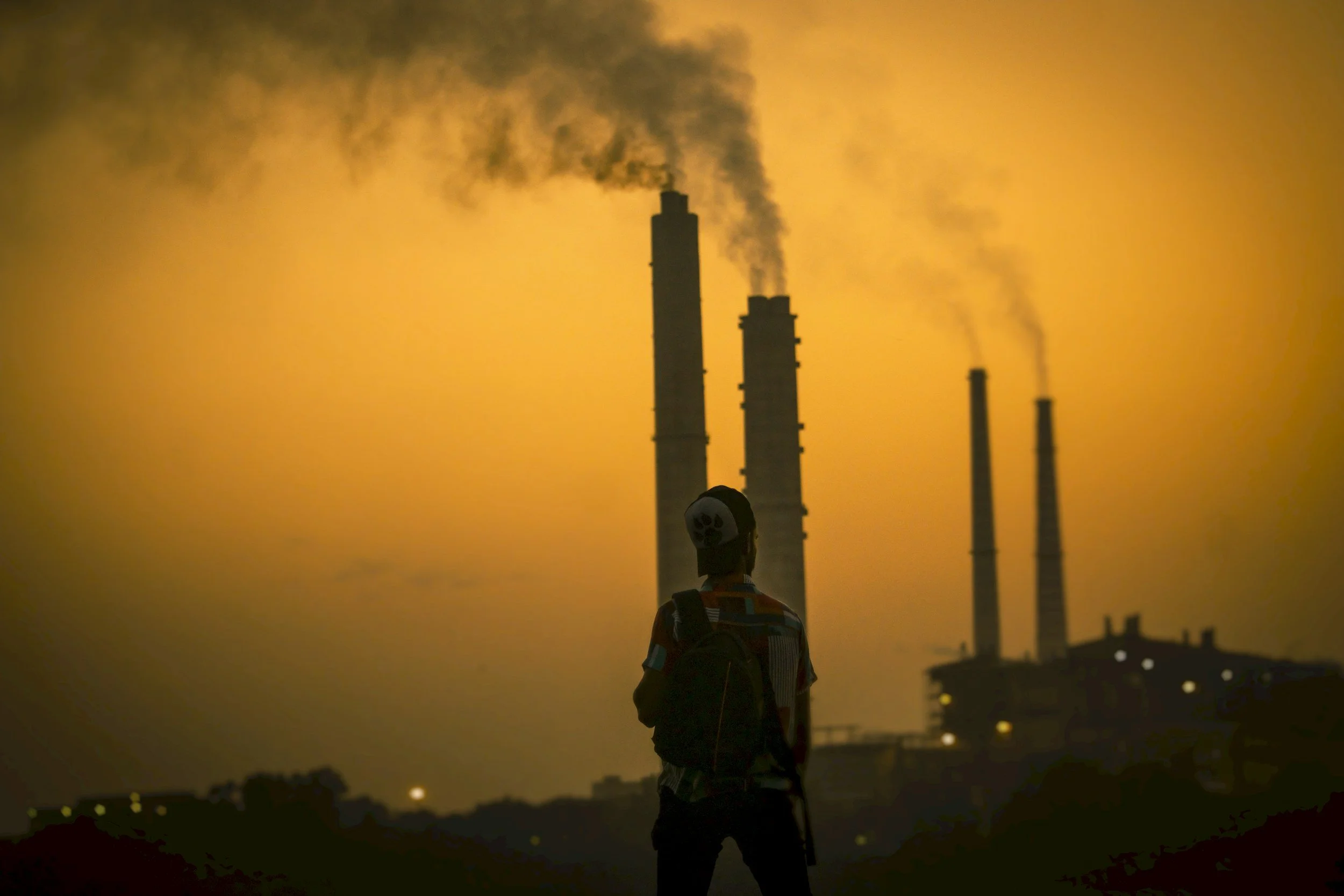
In coal-mining villages in Jharkhand, India, a group of local women took air pollution into their own hands and actually forced local change. Trained as “paryavaran sakhis” (friends of the environment), the women monitored air quality at 69 sites and identified 26 serious pollution hotspots. Using portable air quality monitors, they found dangerously high levels of PM2.5 (fine particles linked to asthma, heart disease, and lung cancer) not just near mines, but in everyday places like markets, schools, hospitals, anganwadis, and ponds. In some spots, pollution levels were more than 50X higher than World Health Organization guidelines.
Surveys and group discussions showed residents were well aware their air was toxic, and over 80% reported health issues such as breathing problems, headaches, chronic lung disease, and impacts on children, pregnant women, and the elderly. Despite this, the study noted the local public health system was extremely unprepared and inaccessible, forcing people to travel long distances for treatment.
What makes the research powerful is that it was community-led, and it led to quick, real-world action. The women took their data and met with the coal companies, unions, and local officials. Within months, the coal companies mandated measures such as covering coal during transport, installing water sprinklers along truck routes, installing public air quality monitors, sweeping roads regularly, and replacing flimsy dust barriers with metal sheets around mines. The study is a successful example of how grassroots, women-led research can ensure accountability and solutions in rural places where official monitoring barely exists.
MORE IN SUSTAINABILITY NEWS
How the planet fared in 2025 — the good, the bad, and the ugly.
Chart: Clean energy remained dominant in 2025 in the US — despite setbacks.
Coal for Christmas.
Ford is retreating from EVs — but embracing grid batteries.
A growing number of countries are achieving economic growth while also slashing emissions. “We’re sometimes told the world can’t cut emissions without cutting growth,” said an analyst. “The opposite is happening.”
How the devil is in the details of greener new jobs.
The Trump administration plans to dismantle the National Center for Atmospheric Research in Colorado. The New York Times credited the center with “many of the biggest scientific advances in humanity’s understanding of weather and climate” since it was founded in 1960. Dismantling this would put the entire country at risk.
What your cheap clothes cost the planet.
Flying drones over whales to collect samples of exhaled breath from their blowholes is a breakthrough in non-invasive health monitoring for marine giants in Arctic regions. Unfortunately, a study revealed for the first time a deadly virus known as cetacean morbillivirus above the Arctic Circle.
A summary of 2025 climate politics.