
Sustainability Weekly

Fridays are for…
Earth Week!
by Alli DiGiacomo
Happy Friday! Next week is Earth Week! There are several events planned around NYC happening this weekend (see below), as well as an entire schedule of Earth Week activities at CTA! In addition to the ongoing Spring Bike Challenge happening, the Earth Week Challenge starts this weekend! Most importantly, get outside this next week and do something you enjoy to celebrate our planet!
Earth Day is always a reminder about the importance of protecting nature and life on earth, and how important our role as humans is. There is a balance between educating ourselves on the systematic forces (such as our government’s policies or big oil) driving environmental destruction, and our individual roles and actions. When everything feels out of control, one of the easiest ways to regain that control is to focus on yourself. But the reality is, while there are some things out of our control, our small actions do add up and make a difference, even if it doesn’t always feel like it.
“The Earth is what we all have in common.”—Wendell Berry
Keep reading for this week’s sustainability news…
T H I S W E E K ’ S T O P S T O R I E S
A BRIEF HISTORY OF EARTH DAY
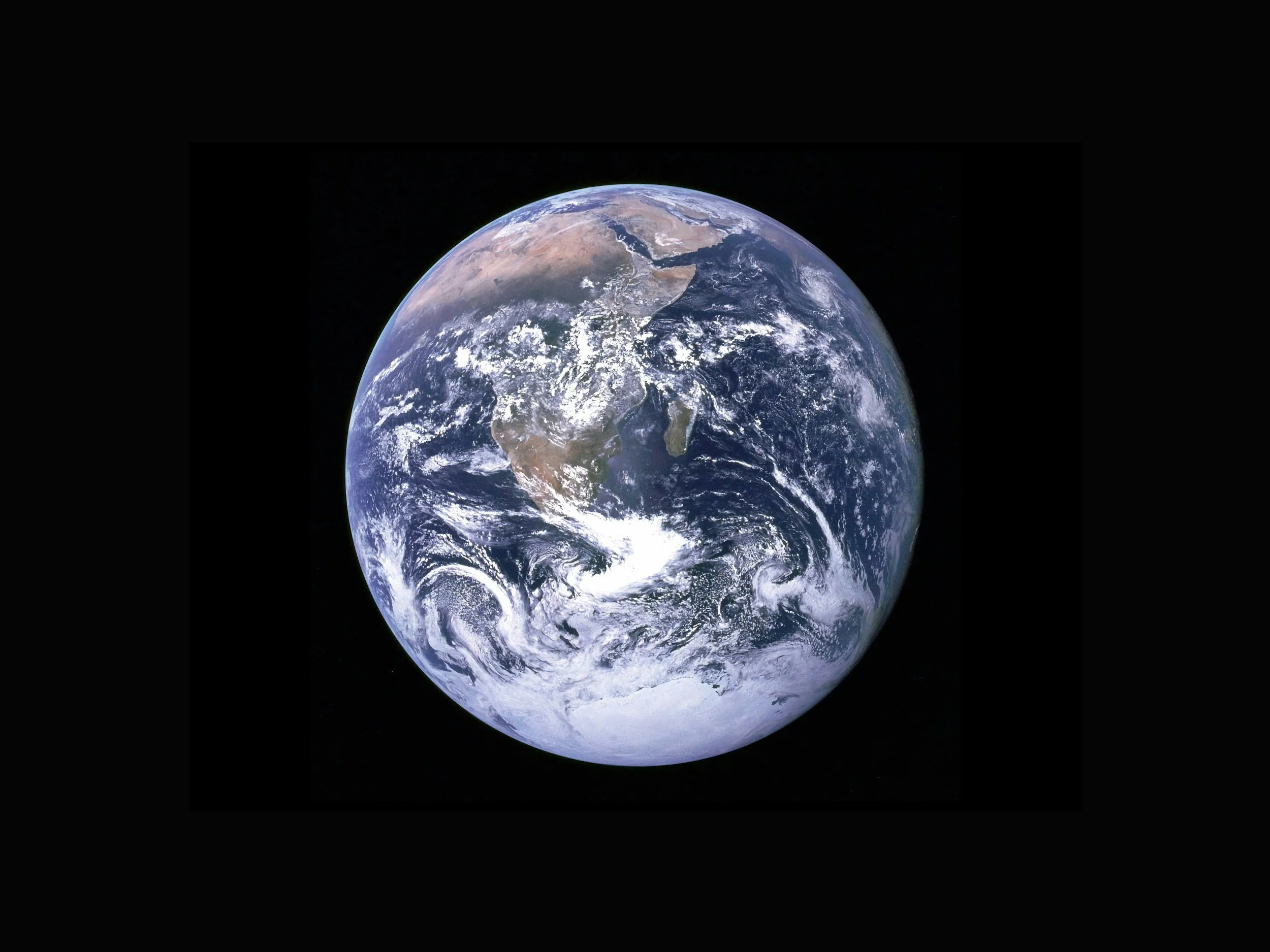
The first Earth Day was in 1970 after a decade of “environmental awakening” in the 1960’s, including the release of “Silent Spring” by Rachel Carson, the passing of the Wilderness Act that protected federal land, and a major oil spill in California in 1969. On April 22nd, 1970, over 20 million Americans participated in demonstrations, clean-ups, and educational events for Earth Day, making it one of the largest public demonstrations in U.S. history. People describe it as a “rare political alignment” with support from republicans and democrats, rich and poor, residents ranging from urban to farming districts, and leaders in both business and labor industries. Locally in NYC, most of the events took place in Union Square Park where an estimated 100,000 people attended what is described as an "ecological carnival”, which closed Fifth Avenue to traffic from Union Square Park to Central Park. Gaylord Nelson wrote for the New York Times in 1970, “the reason Earth Day worked is that it organized itself. The idea was out there and everybody grabbed it. I wanted a demonstration by so many people that politicians would say, “Holy cow, people care about this.”
Earth Day helped turn environmental protection into a major political and social issue. In the same year, the United States created the Environmental Protection Agency and passed landmark laws including the Clean Air Act and the National Environmental Policy Act. In 1972 and 1973, the Clean Water Act, and Endangered Species Act were also passed. These laws have since dramatically improved air and water quality, reduced pollution, and protected wildlife and natural habitats. Earth Day also inspired a global environmental movement, and today more than a billion people in nearly 200 countries participate each year.
PROOF EARTH DAY MAKES A DIFFERENCE
There have been countless success stories since the first Earth Day, as well as major setbacks and failures. Here are just a few of the more positive achievements that have been inspired by, initiated or indirectly influenced by Earth Day since 1970:
The creation of the United States Environmental Protection Agency in 1970 gave the federal government the power to regulate pollution and enforce environmental laws.
The Clean Air Act has reduced the combined emissions of the six most common air pollutants in the United States by 78% since 1970, even as the U.S. economy has grown by more than 300%.
The Clean Water Act helped restore thousands of rivers, lakes, and wetlands. More than 92% of Americans now receive drinking water from community systems that meet federal health standards, compared with far lower levels in the early 1970s.
The banning of DDT in 1972 helped species rebound from near extinction. The population of the Bald Eagle increased from just 417 nesting pairs in 1963 to more than 71,400 nesting pairs today, while the Peregrine Falcon has recovered enough to be removed from the endangered species list.
The Endangered Species Act has prevented the extinction of an estimated 99% of the species placed under its protection. More than 100 species have recovered enough to be removed from the endangered list.
The Montreal Protocol helped reverse damage to the ozone layer. Scientists estimate that by 2065 the treaty will have prevented more than 443 million cases of skin cancer and 2.3 million skin-cancer deaths in the United States alone.
Acid rain has fallen dramatically since amendments to the Clean Air Act in 1990. Sulfur dioxide emissions from power plants have dropped by about 94%, and nitrogen oxide emissions have fallen by more than 87%, allowing many lakes and forests in the northeastern United States to recover.
Cars and trucks are far cleaner than they were in 1970. A new passenger vehicle today emits about 99% less carbon monoxide, hydrocarbons, and nitrogen oxides than a new car did in the early 1970s.
Renewable energy has grown from a tiny part of the power supply to one of the fastest-growing sources of electricity. In 2025, wind and solar together produced more electricity in the United States than coal for the first time.
Recycling and waste management have improved significantly. In 1960, Americans recycled only about 6.4% of municipal solid waste; today the rate is about 32%. The amount of material composted has increased from almost nothing in 1960 to more than 25 million tons per year today. Modern landfills are also lined and monitored to prevent contamination and often capture methane gas for energy.
Communities now manage hazardous and electronic waste more safely. More than 25 states have electronic waste recycling laws, and Americans now recycle millions of tons of electronics, batteries, paint, and other hazardous materials each year rather than sending them to landfills.
The Comprehensive Environmental Response, Compensation, and Liability Act, better known as CERCLA or Superfund, created a federal program to clean up the nation’s most contaminated sites. Since 1980, more than 1,500 hazardous waste sites have had human exposure risks brought under control, and 458 of the worst sites have been fully cleaned up and removed from the national priority list. Nearly 1,200 former Superfund sites now support new uses such as parks, housing, and businesses.
The National Park System now includes more than 430 sites covering over 85 million acres, with annual visitation rising from about 215 million visits in 1970 to over 325 million in recent years. During this period, conservation and restoration efforts have strengthened, including major ecological recoveries such as the reintroduction of gray wolves to Yellowstone in 1995.
NYC EARTH DAY EVENTS SCHEDULE
EARTH DAY 2026 NYC EVENTS:
🌎 Saturday, April 18th: Earth Day Festival by NYC Parks
Monument Plaza in Fort Greene Park, 11am - 2pm.
🌎 Saturday, April 18th: Compost Giveaway & Seedling Planting by NYC Parks
St Nicholas Miracle Garden, Manhattan, 10am - 3pm.
🌎 Saturday, April 18th: Highland Park Earth Day Celebration by NYC Parks
Jamaica Avenue and Elton Street, Queens, 12pm - 2pm.
🌎 Saturday, April 18th: Earth Day 2026 on Governors Island
Governors Island, 10am - 6pm.
🌎 Saturday, April 18th: EarthFest at American Museum of Natural History
Museum of Natural History, 11am - 4pm.
🌎 Sunday, April 19th: Earth Day Festival by Earth Day Initiative
Union Square, 12pm - 6pm.
🌎 Sunday, April 19th: Paws for the Planet by NYC Guardians
Central Park East Meadow, 2pm - 6pm.
🌎 Sunday, April 19th: Earth Day Community Event by NYC Parks
Maple Street Community Garden, Brooklyn, 10am - 3pm.
🌎 Sunday, April 19th: Earth Day Weekend by NYC Parks
Wave Hill, Bronx, 10am - 5pm.
🌎 Friday, April 24th: Arbor Day Celebration by NYC Parks
Little Bay Park, Queens, 3:30pm - 5pm.
🌎 Saturday, April 25th: Car-Free Earth Day by NYC DOT
Different streets in each borough, see link. 10am - 4pm.
Free 30min Citibike rides.
🌎 Saturday, April 25th: Randall’s Island Earth Day Festival by NYC Parks
Urban Farm + Fields at Randall’s Island, 12pm - 3pm
🌎 April 18th - 29th: Volunteer with Big Reuse.
This is not a complete list! See the NYC Parks Department website for more events, as well as other registered Earth Day Events here.
SUSTAINABILITY NEWS
The U.S. Department of Health and Human Services launched a $144 million research initiative to measure how microplastics accumulate in the human body and assess their health impacts.
A new study found there are parallels between whale communication and human speech, including our vowels and patterns of language.
Finnish delight: how the world’s happiest country decarbonized its power sector.
Watch for Earth Week: The 25 Best Science and Nature Documentaries of the 21st Century.
How saving birds protects the planet: Interview with author Scott Weidensaul.
Hydropower Line From Quebec to Queens Could Power a Million N.Y.C. Homes.
Canada aims to double areas protected from development by 2030.
How to reduce your microplastic exposure overnight.
San Diego, once the poster child for a drought-parched Southern Californian city, is now looking to become a water exporter thanks to North America’s largest desalination plant. It is producing so much freshwater for the San Diego County Water Authority that the city is working on a deal to sell millions of gallons to Arizona and Nevada.
France is doubling its funding for electrification.
Maine is now the state with the highest per capita distributed solar capacity, with growth driven heavily by community solar development, according to a new report.
Deep-diving robots help crack the mystery of Antarctica’s vanishing sea ice.
In California, 'green house calls' offer free energy efficiency and water conservation services.
Big grid batteries are finally on a roll in New England.
The beloved emperor penguin and Antarctic fur seal are now officially endangered.
A US dumping ground in Pennsylvania that stores hundreds of drums with nuclear waste is set to be cleaned up by the US Army Corps of Engineers.
Puerto Rico’s rainforest center reborn: in pictures.
“We are the first generation to feel the impact of climate change and the last generation that can do something about it.”— Barack Obama