
Sustainability Weekly

Fridays are for…
CTA’s Impact + Sustainability Report, City of Forest Day, Battery-Powered Food Carts, and more!
by Alli DiGiacomo
It’s October! This Saturday, October 3, is NYC’s fifth annual City of Forest Day, with 150+ events across all five boroughs celebrating and caring for the city’s over 7 million trees. The activities include tree planting and stewardship, guided walks, birding, park cleanups, and many more family-friendly events. City of Forest Day started in 2022 by the Nature Conservancy and NYC Parks to bring New Yorkers together to learn about, celebrate, and care for the city’s urban forest.
A special shoutout to the group of volunteers who showed up for our day with the LES Ecology Center at Pier 42 last week! If you haven’t yet, check out the photos and more information about it here.
Keep reading for this week’s sustainability news…
T H I S W E E K ’ S T O P S T O R I E S
CTA PUBLISHES OUR NEW IMPACT + SUSTAINABILITY REPORT
In celebration of NYC Climate Week, CTA is excited to share our latest Impact + Sustainability Report! The report takes a look at the progress we’ve made across six areas: well-being, community impact, energy and carbon, resources, education, and social equity. It summarizes how sustainability has become increasingly integrated into both our projects and everyday operations. From reducing our operating carbon emissions by 11.8% since our 2022 baseline to completing six projects with solar energy systems, the report captures where we are today and the goals we’re setting for the years ahead. Take a look at the full report here, or on our Impact page.
BROOKLYN BASED STARTUP IS TESTING A BATTERY-SWAPPING PROGRAM FOR NYC FOOD CARTS

A new NYC pilot is testing a quieter, cleaner alternative to the gas and diesel-powered generators commonly used by food carts. Brooklyn-based startup PopWheels is giving 10 vendors in Flushing Meadows Corona Park access to swappable batteries, letting them exchange depleted batteries for fully charged ones instead of buying and charging their own. The six-month pilot is currently free thanks to almost $77,000 in grants, with the goal of eventually offering the service at a cost competitive with buying and fueling a generator. One of the vendors participating currently spends about $500–$600 a month on generator fuel and maintenance, while also dealing with noise and exhaust.
The same batteries are already used by PopWheels’ e-bike delivery workers, charging them between $65 and $95 a month to access batteries for their e-bikes from over 45 cabinets scattered across the city. For food carts, the delivery workers can help shuttle batteries to vendors farther from charging cabinets. The system still has limitations, such as for energy-intensive businesses like ice cream trucks that need more power than the batteries can provide, and many vendors lack places to charge batteries themselves if they chose that option. For now, the Queens pilot is focused on proving the system can be reliable, affordable, and easy to use. If it is successful, this program will help NYC become quieter and less polluted while simultaneously benefiting the health of workers and citizens.
THE UNITED NATIONS PASSED THE FIRST DECLARATION ON SEA LEVEL RISE TO PROTECT ISLAND NATIONS SOVEREIGNTY
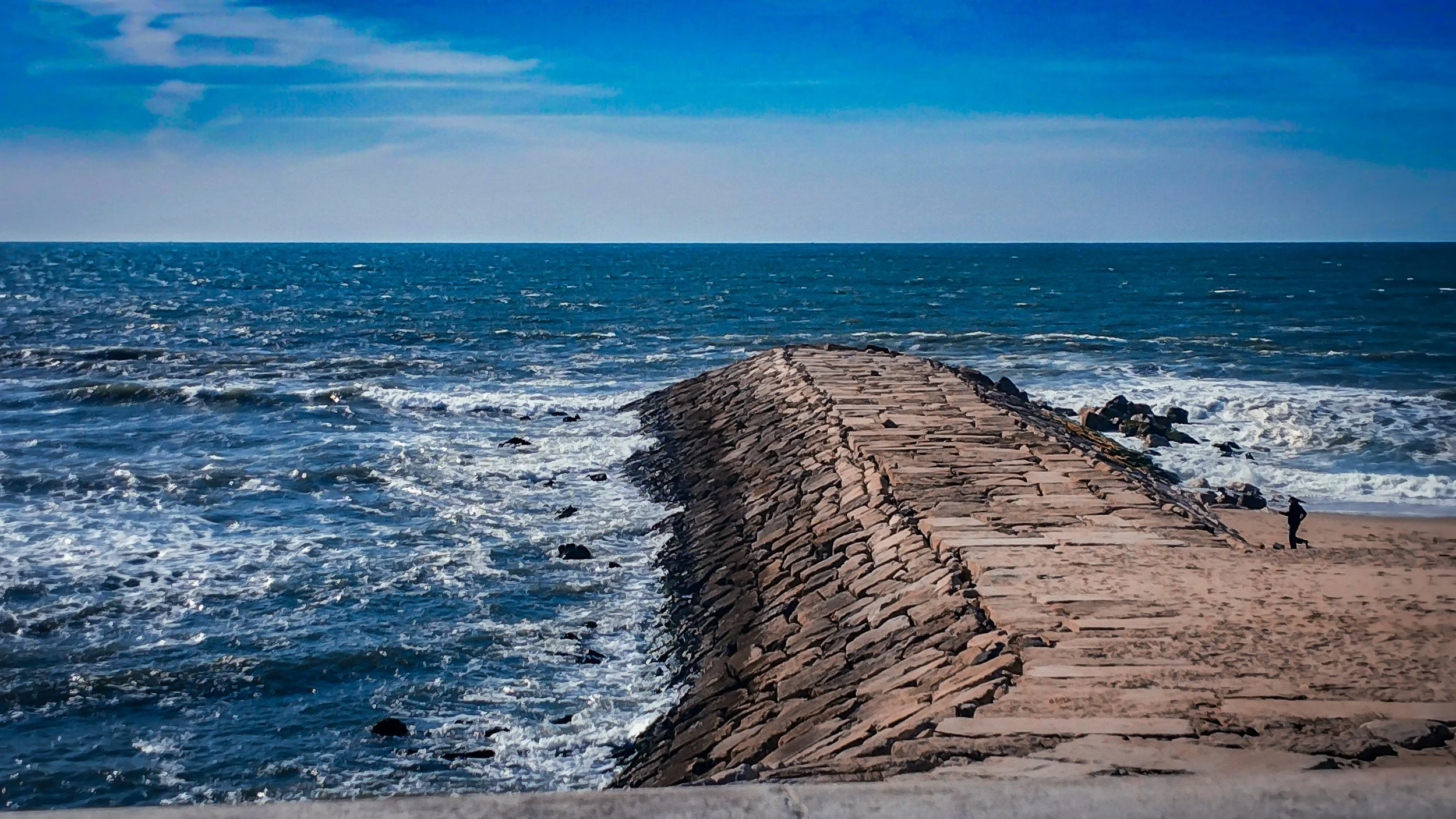
The United Nations General Assembly has unanimously approved a new declaration addressing sea level rise and the future of low-lying island nations. The agreement affirms that countries can maintain their sovereignty and maritime boundaries even if rising seas eventually submerge parts or all of their land. This is a big deal for countries such as Tuvalu and the Marshall Islands, which face the possibility of severe flooding over the next few decades. The declaration also recognizes an “urgent” need for developed countries and major emitters to expand climate adaptation funding for vulnerable island states. The funding will support projects such as seawalls, mangrove restoration, or relocating communities away from flood-prone areas.
The agreement protects countries rights to their existing ocean territories, which are important for fishing, energy development, natural resources, and national economies such as tourism. It does represent a rare point of international consensus on climate issues, but does not actually provide the additional funding or resources technically. In terms of legality, the declaration gives international political and legal recognition to the idea that rising seas should not automatically erase a country's sovereignty or its established ocean territory. It provides greater legal certainty for vulnerable island states, but it does not physically stop sea-level rise, create new territory, or by itself guarantee climate funding. The declaration also isn't the same thing as a binding treaty with a new enforcement system. The UN itself describes it as a “declaration adopted by the General Assembly”.
OTHER SUSTAINABILITY NEWS
Instead of mining earth, what about mining waste?
Scientists discovered 57 new ocean species in just 2 weeks in the South Atlantic.
Federal court rules there is no constitutional right to safe drinking water.
Record ocean heat, droughts, floods, wildfires, and extreme heat have pushed seven of the nine Planetary Boundaries to their highest levels of transgression yet, according to the 2026 Planetary Health Check.
A highrise data center proposal by SOM stirs opposition in Kansas City.
“Homes That Make You Feel as Good as They Look”: Design strategies that consider both mind and body are expanding the idea of wellness at home beyond physical health.
Scientists in China developed solar panels that work underwater.
Here are eight incredible animal-friendly homes around the world.
A new analysis found that global carbon emissions are set to fall 0.5% in 2026 amid the Hormuz Crisis.
Athens' former airport is transforming into one of Europe's largest urban green spaces.
California legalized plug-in solar and passed incentives for electrification. The so-called balcony solar bill in particular is expected to supercharge the market, making cheap, personal solar panels more widely accessible.
New York awards contracts to eight large-scale battery projects totalling 950 MW of capacity as it aims to reach 6 GW of installed storage by 2030.
Learn about Novele, the startup raising $17 million for super-thin, wall-mounted batteries.
New York’s Erie Canal will host a marine electrification demonstration project including an electric workboat, fast-charging infrastructure, and a floating energy storage and charging platform called the “ChargeBarge.”
Which AI models use the most energy? The Sustainable AI Group created an interactive dashboard.
Scientists deliver the starkest warning yet of profound changes sweeping the planet's oceans. The oceans are warming at an alarming pace, bringing far-reaching consequences for which the world is unprepared, according to a report by more than 100 international scientists.