
Sustainability Weekly

Fridays are for…
Skip the Straw Day, Polar Bears, The Worlds Largest Battery, and more!
by Alli DiGiacomo
Happy Friday! Today is National Skip the Straw Day! Straws harm marine life when they consume plastics accidentally or when they mistake it for food. Also, plastics don't biodegrade, they just break down into smaller and finer, microscopic pieces and produce bisphenol A (BPA) which interferes with reproductive systems and causes cancer in marine life. According to the National Park Service, Americans use 500 million drinking straws daily! So, on National Skip the Straw Day that's potentially 500 million fewer straws that don't end up in landfills or the ocean.
Today is also International Polar Bear Day! The polar bear population is declining due to climate change, which is causing their icy habitat to decline. Did you know that polar bear fur is not actually white? They have black skin and translucent fur that reflects their surroundings and appears white. Another fun fact is that they can get up to 9 feet tall and weigh 1,400 lbs!
Keep reading for more sustainability news…
T H I S W E E K ’ S T O P S T O R I E S
NEW ENERGY CELL CONVERTS BOTH RAIN AND SUN TO ELECTRICITY
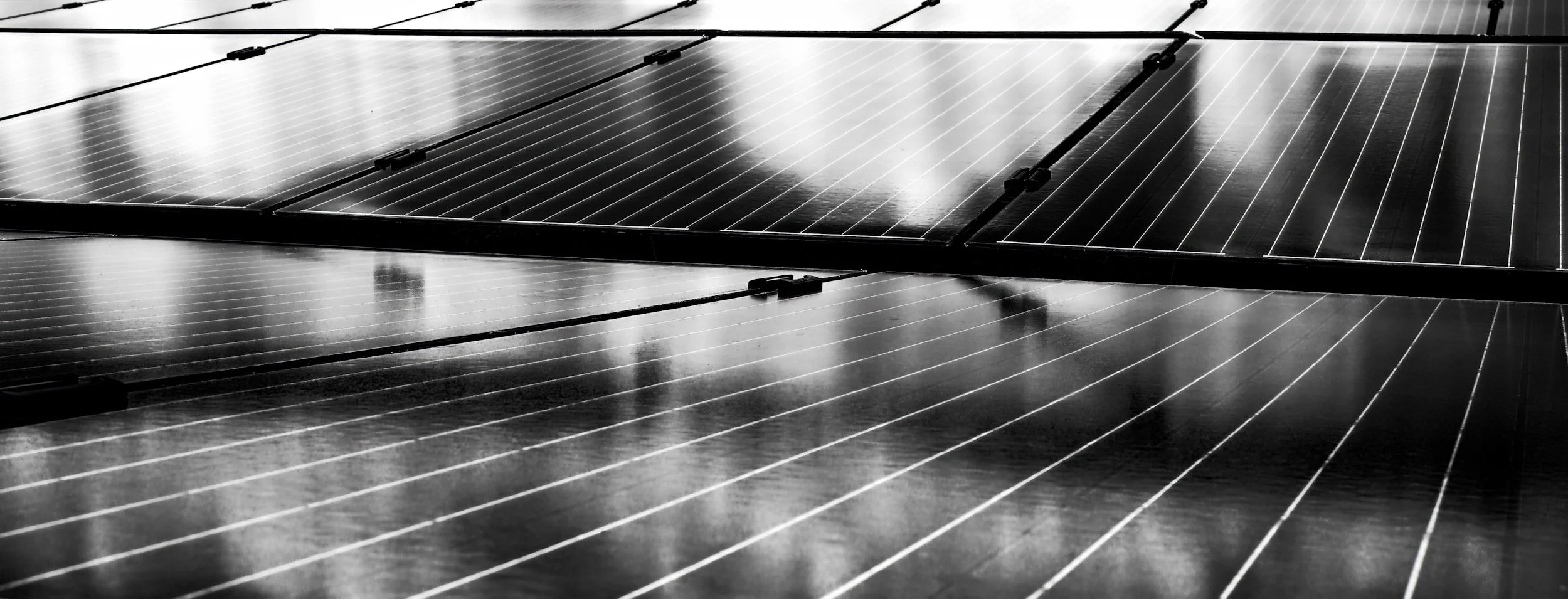
Researchers at the Institute of Materials Science of Seville (ICMS) in Spain have developed a new perovskite-based solar cell that can generate electricity from both sunshine and rain. They added an extremely thin (only 100 nanometers thick) transparent film over the perovskite cell using plasma technology. This layer protects the cell, which helps solve perovskite’s usual reliability problems, and helps increase light absorption. The film acts like a triboelectric surface, meaning it can turn the kinetic energy from falling raindrops into electricity. In lab tests, a single raindrop created a potential difference of about 110 volts which is surprisingly enough to power a small portable device.
This is a big deal because traditional solar panels lose efficiency on cloudy or rainy/snowy days, which makes them less useful in wetter climates. By combining solar power with rain energy harvesting in one hybrid device, the ICMS team created a system that keeps producing power in changing weather conditions. The researchers say this could help power outdoor sensors, LED circuits (even underwater), structural monitoring systems on bridges, environmental sensors for weather prediction and agriculture, and a wide range of other devices.
GOOGLE IS BUILDING THE WORLD'S LARGEST BATTERY

Google just announced plans to build a massive new data center in Pine Island, Minnesota. The facility will run on 1.9 gigawatts of wind and solar power, paired with what’s being called the “world’s largest battery”, a 300-megawatt iron-air battery with a huge 30 gigawatt-hour capacity and a 100-hour duration. Google is teaming up with Xcel Energy to develop 1.4 GW of wind and 200 MW of solar, which will feed the battery built by Form Energy. It’s hard to confirm whether it’s truly the largest in the world, the 30 GWh size would beat many existing lithium-ion projects. The goal is to keep the data center running on clean power not just when the sun is shining or wind is blowing, but for days at a time.
The battery is unique and works very differently from typical lithium-ion batteries. Instead of lithium, it uses iron and air, basically storing electricity by rusting iron and then reversing the rusting process to release energy. When oxygen hits the iron, it creates rust and produces electricity. When recharged, the system removes the oxygen and turns it back into iron. It should be noted that these batteries are heavier and less efficient (returning about 50–70% of stored energy compared to 90%+ for lithium-ion), but they’re one third the cost of lithium-ion storage. The Minnesota project also introduces a new utility model called the Clean Energy Accelerator Charge to fund clean energy projects without raising electricity bills. Google is also putting $50 million into Xcel’s Capacity Connect program to install smaller batteries across the grid.
RESEARCHERS SUCCESSFULLY GENERATE ELECTRICITY FROM COMPRESSION OF FLEXIBLE MATERIAL
Researchers at RMIT University in Australia have figured out how to turn nylon film into a flexible electricity generator that keeps working even after being run over by a car multiple times. The device produces power through piezoelectricity, meaning it generates an electrical charge when it’s squeezed, bent, tapped, or vibrated. This happens naturally in certain materials like quartz and some ceramics. To make this happen, the team used high-frequency sound vibrations combined with an electric field while the nylon was solidifying, which aligned its molecules into a more ordered structure. This resulted in a thin, flexible film that’s extremely durable and keeps producing electricity even after folding, stretching, hammer impacts, and being driven over. This solves the issue with energy-harvesting plastics that so far have been too fragile for real-world use. The researchers say this could lead to self-powered road sensors, traffic monitoring systems, wearable tech, smart surfaces, flexible electronics, sports equipment, and more. Since it captures energy from everyday movement and compression, it could also help reduce carbon emissions by tapping into energy that would otherwise go to waste. The team is now trying to scale up this new tech.
MORE IN SUSTAINABILITY NEWS
Finland is now using hot sand to produce “fossil-free” steam, a new form of renewable energy generation that solves a blind spot in industrial heat production — one of the largest sources of CO2 emissions.
Where’s New York on climate goals? Falling behind.
Three agrivoltaics projects totalling 13 MW in capacity come online in New York and Vermont, creating both a new source of power and grazing land for sheep.
Offshore wind showed up big during the East Coast’s brutal cold.
Would you pay $49 a month to drink recycled wastewater?
What’s behind your sky-high power bill: A region-by-region breakdown.
From cubicles to kitchens: How empty offices are becoming homes.
What are virtual power plants?
Trump administration eases limits on coal plants for emitting mercury, other toxins.
Indonesia’s shift to cleaner cooking fuels has dramatically improved air quality and health and reduced deaths from indoor air pollution.
Giant tortoises returned to a Galápagos island for the first time in over 180 years
How Billie Eilish, Dave Matthews Band, and Jack Johnson have been 'greening' their concert tours.
Scientists found a way to transform cotton fabric into a self-sustaining power source by harvesting electricity from humidity without batteries or external power sources.
The oldest U.S. state park, Niagara Falls State Park, is adding more than 150 acres and new hiking trails.
Bogotá, Colombia, which was one of the world's most polluted cities a decade ago, launched its first ‘clean air zone’ thanks to more than 350 miles of cycle lanes, 1,400 electric buses, and three new cable car lines.